Chad's Galactic Mining Empire
- 4.2
- Rating
- 10.00K
- Installs
- Free
- Price

 Analysis by App-foxy
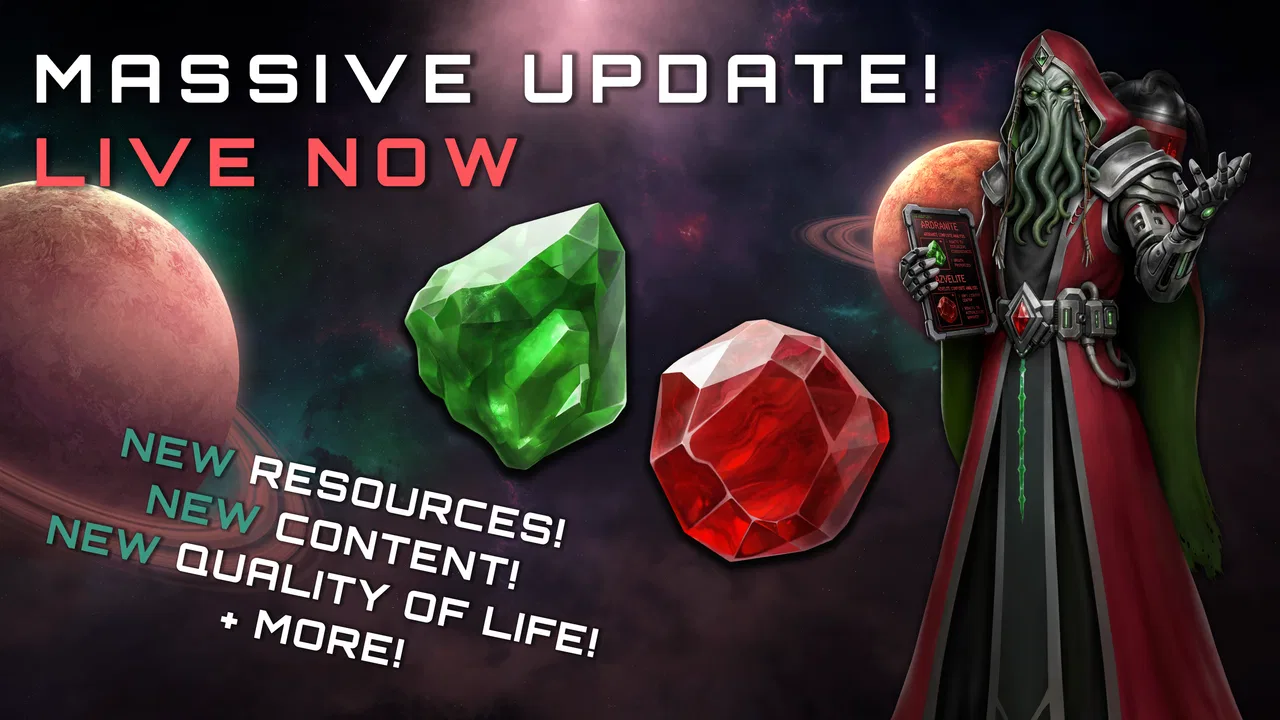
I approached Chad's Galactic Mining Empire expecting a relaxed mining game, but its appeal is more specific: it turns digging, collecting, and crafting into a steady chain of small decisions. Developed by Octocube Games, this free simulation title is aimed at players who enjoy watching progress build over time rather than chasing a short, highly scripted adventure. The central idea is simple—mine geological resources, improve what you can do with them, and keep pushing toward a more productive operation—but the satisfaction comes from deciding when to act and when to let the incremental side of the game do its work.
That makes it a good fit for short sessions. I can imagine opening it while waiting for a bus, checking what has accumulated, making one useful upgrade, and closing it again without feeling that I have abandoned a complicated mission. It also has enough room for players who like planning, because each resource has more value when I think about what it enables next instead of spending everything immediately. The store summary describes it as a massive mining and crafting incremental game, and that combination is the important part: mining supplies the raw material, while crafting gives those materials a purpose beyond simply increasing a counter.
What the first session feels like
The first thing to understand is that this is not trying to replace a full construction sandbox or a conventional action game. The focus is on the rhythm of production. I perform a mining action, gather materials, use them to improve my operation, and then return to the same loop with better potential. That structure is familiar to fans of incremental games, but the geological theme gives the routine a clearer identity than a generic number-goes-up experience.
You May Also Like

 AccuWeather: Weather Radar
AccuWeather Review: A Quick, Clear Forecast for Everyday Decisions
For everyday plans, the best forecast is the one you can understand quickly. AccuWeather makes rain timing, radar, and local conditions easy to act on, with a few trade-offs.

 Hill Climb Racing
Why Hill Climb Racing Still Turns Crashes Into One More Run
A tiny car, a bumpy hill and one more upgrade: Hill Climb Racing keeps resurfacing because its simple chaos makes every near-miss feel personal.

 AliExpress - Shopping App
AliExpress Makes Global Shopping Feel Personal, but Shoppers Bear the Risk
AliExpress turns a global marketplace into a pocket-sized discovery engine. Its reach is useful, its shopping loop compelling, and its trade-offs easy to miss.

 Lords Mobile: Kingdom Wars
Lords Mobile Is a Kingdom-Building Routine, Not a Quick Match
A case-by-case verdict on the building, battles, device demands, and social commitments that make Lords Mobile rewarding for some players and exhausting for others.

 PDF Scanner app - TapScanner
TapScanner Makes Paperwork Easier to Capture, Check, and Share
TapScanner makes scanning with a phone feel less like a rescue operation and more like a dependable step in getting work done. Its capture tools are useful, though not flawless.

 Block Blast!
 Shows How Much a Puzzle Game Can Leave Out
A quiet grid game shows why puzzle players increasingly value instant clarity, repeatable skill and low-pressure play—and where the genre still needs to catch up.
More From Our News Desk
View All News


My advice to a new player is to resist the urge to tap through every available action without looking at the result. The early minutes are the best time to learn which resources matter immediately and which ones are better saved for a larger crafting goal. A quick upgrade can feel rewarding, yet spending all of a rare material may leave the next useful step out of reach. I found the game more enjoyable when I treated the first session as a short experiment rather than a race.
The presentation also sets an expectation about pace. This is a game for gradual improvement, not instant mastery. If you prefer constant movement, combat, or a map filled with surprises every few seconds, the mining loop may feel too quiet. If you enjoy checking a system, making a choice, and returning later to see the effect, the format makes much more sense.
It is free to start, with optional in-app purchases ranging from $0.99 to $39.99 per item. That matters because incremental games can make convenience tempting once progress slows. I would begin without buying anything and first decide whether the basic loop holds my attention. The free entry is enough to judge the game’s personality before treating any purchase as worthwhile.
Getting oriented without overthinking it
When I start a game like this, I look for three things: where the main mining action is located, where collected materials are shown, and where crafting or upgrades are handled. I recommend doing the same here. Rather than exploring every menu immediately, identify the path from extraction to improvement. Once that route is clear, the rest of the interface becomes easier to interpret.
A useful early habit is to pause after each meaningful gain and ask what it changes. Does it unlock a crafting possibility? Does it improve the speed or value of future work? Does it simply move me closer to a longer objective? That question prevents the common mistake of treating every resource as equally disposable. In an incremental game, the best choice is often the one that improves the next several actions, not the one that gives the biggest immediate number.
The game is rated Teen, so I would not present it as a children’s mining toy. That rating is also a reminder for families to check the experience themselves before handing it to a younger player, especially because optional purchases are part of the overall setup. For adults and older teenagers who already understand incremental progression, the premise is straightforward enough to learn without a long tutorial.
How to reach the first satisfying result
The first meaningful success is not merely collecting a piece of geology. It is completing a small cycle: mine enough material, use it deliberately, and notice that the next round feels more efficient or more capable. I would make that the goal of the opening session. Do not worry about building the perfect long-term strategy. Instead, choose one modest improvement and follow its effect through the next few actions.
One practical approach is to keep a small reserve of materials. Spend the common resources freely enough to learn the crafting flow, but hold back anything that appears less plentiful until you understand its role. This is one of the game’s less obvious trade-offs. Early spending can make the screen look more active, while saving can produce a stronger upgrade later. Neither approach is always correct; the better choice depends on whether you are playing for immediate feedback or sustained progress.
Another useful technique is to play in deliberate bursts. During a focused session, mine and craft with a specific objective. When you return later, review what changed before starting another burst. This keeps the incremental structure from becoming background noise. It also makes it easier to tell whether an upgrade genuinely helps or merely creates the impression of progress.
For a realistic everyday example, imagine having ten minutes before an appointment. I would open the game, collect whatever is ready, check the next affordable improvement, and stop once I had made one clear decision. That is a better use of the format than trying to force a long session. The game’s strength is that a short visit can still have a beginning, a choice, and a result.
Where new players can become confused
The biggest source of confusion is the difference between activity and progress. Mining often feels productive because it is the visible action, but crafting and upgrades determine whether that activity becomes more valuable. If I only focus on gathering, I can end up with a busy routine that does not improve the operation as much as it could. If I spend everything on the first available option, I can create the opposite problem and lack flexibility.
I also recommend reading resource requirements carefully before committing materials. In games built around production chains, an item that looks useful now may be needed for a more important step later. The safest method is to choose one near-term target and keep enough supplies for it. That simple discipline reduces the feeling that progress has stalled for no obvious reason.
Another possible misunderstanding concerns the word “massive.” I would not interpret it as a promise of a huge open world in the traditional exploration sense. Here, the scale is better understood as the potential breadth of the mining-and-crafting progression. Players looking for free movement, character-driven storytelling, or a large world to roam should choose a different kind of simulation. This game is more about managing a growing process than inhabiting a detailed landscape.
Because the game is incremental, some improvements may feel less dramatic than a new tool or location would feel in a conventional adventure. That is not necessarily a flaw, but it changes how I measure enjoyment. I look for smoother routines, better resource control, and more purposeful choices. If those quieter changes do not feel rewarding, the genre itself may be the problem rather than this particular title.
Building a better routine after the opening
Once the first cycle makes sense, I would divide play into two modes. The first is collection: gather what the operation has produced and inspect the current options. The second is planning: decide which upgrade or crafting step will improve the next cycle. Keeping those modes separate helps prevent impulse spending and gives each visit a clear purpose.
A strong routine is to set a priority before touching the crafting menu. For example, I might decide that the next session is about improving output, while another session is about reaching a particular crafting requirement. This creates a personal checklist without turning the game into a chore. It also makes the system easier to evaluate because I can see whether my decision produced the result I wanted.
I would not recommend buying an item simply because progress feels slower than it did at the beginning. Early progress is naturally exciting, and the contrast can make a normal pause feel like a problem. Play several short sessions first. If the decisions remain interesting when the rewards arrive less often, then the game has probably earned a longer place on your device. If not, spending money will not fix a mismatch with the incremental format.
The optional purchase range is broad enough that different players may approach it differently, but my own rule would be simple: treat purchases as convenience, never as a requirement for understanding the game. The free starting point is valuable precisely because it lets me test the loop under ordinary conditions. That is especially important for anyone who dislikes pressure around progression.
How it compares with other simulation choices
Compared with a farming simulator, this game is less about arranging a calendar, caring for a wide variety of activities, or building a personal routine around a character. Its appeal is narrower and more focused: extract, process, improve. Compared with a factory or automation game, it offers a more immediate mining theme and a lighter commitment to designing complex production layouts. Compared with a traditional idle game, the crafting layer gives resources a more concrete purpose than simply watching values rise.
That middle position is useful. Players who find full management simulations exhausting may appreciate the smaller decision space, while players who find pure idle games too passive may enjoy having mining and crafting choices to make. The trade-off is that it may not satisfy someone who wants deep construction, detailed logistics, or a large narrative campaign. I would choose this over those alternatives when I want a compact progression loop, not when I want a world that demands constant involvement.
The theme also changes how the loop feels. Geological materials suggest accumulation, refinement, and patience, so the gradual structure feels more natural here than it would in a game pretending every reward is an urgent event. I liked that sense of building an operation piece by piece. Still, the theme cannot carry the experience on its own; the long-term value depends on whether the crafting decisions continue to feel meaningful.
Who will enjoy it and who should skip it
I would recommend Chad's Galactic Mining Empire to someone who likes incremental games but wants a stronger resource-and-crafting identity. It is particularly suitable for players who enjoy checking progress several times a day, making one or two careful decisions, and gradually improving a system. It also works for newcomers who want a simulation game that can be understood through a small, repeatable loop rather than a large set of unrelated mechanics.
I would be more cautious if you need a clear story, fast action, competitive matches, or constant visual change. The game asks you to appreciate small gains. Players who become bored when the main reward is a more efficient version of an earlier action may not find enough variety here. I would also skip optional spending until the free experience has answered the most important question: do you enjoy returning to the mine when there is no dramatic event waiting?
The Teen content rating makes it a better recommendation for older players than for young children, and the presence of in-app purchases is another reason to use sensible purchase controls on a shared device. For a first-time user, neither point should be alarming, but both belong in the decision before installing.
My practical verdict after learning the loop
Octocube Games has chosen a clear direction: a mining-focused simulation built around incremental progress and crafting. The result is easiest to appreciate when I stop expecting a conventional adventure and start treating each session as a small management exercise. Mine with a purpose, keep a reserve, choose upgrades for their future effect, and let the operation grow at its own pace.
The game currently has a 4.2 average from over 400 ratings, with more than 100 written reviews and over 10 thousand installs. Those figures suggest a modest but genuine player base rather than a massive mainstream hit, which matches my impression of its focused design. It launched on June 15, 2026, and runs on Android 7.1 or newer, so compatibility should be checked against the device before downloading.
My final recommendation is conditional but positive. If you want a free-to-start simulation for short, repeatable sessions, this is worth trying without rushing into purchases. Give yourself one complete mining-and-crafting cycle, then return for a few more visits to see whether the gradual improvements remain satisfying. The best way to judge it is by the quality of your next decision, not the size of your first reward. For me, that is where the game earns its place: it turns a simple geological theme into a calm routine with enough planning to keep the numbers from feeling completely empty.
FAQs for Chad's Galactic Mining Empire
01What is Chad's Galactic Mining Empire about?
Chad's Galactic Mining Empire is a space-themed mining and management game centered on building a profitable interstellar operation. You typically collect valuable resources from planets or asteroids, upgrade mining equipment, expand your facilities, and improve production over time. Its appeal comes from combining incremental progress with strategic decisions, making it suitable for players who enjoy relaxed resource management and gradual empire building.
02Is Chad's Galactic Mining Empire free to download and play?
The game is generally presented as a free-to-download experience, although availability and pricing can vary depending on the Android or iOS store listing and your region. Like many management and idle-style games, it may include optional in-app purchases, such as resource bundles, boosts, or premium upgrades. Before downloading, check the store page for current purchase details and whether advertisements are included.
03Does Chad's Galactic Mining Empire require an internet connection?
An internet connection may be needed for certain features, including downloading updates, synchronizing progress, displaying advertisements, processing purchases, or accessing online events and rankings. Some core mining and upgrading activities may work offline, but this can depend on the version installed and the developer’s implementation. If offline play matters to you, test the game after installation rather than assuming every feature will be available without connectivity.
04Is Chad's Galactic Mining Empire suitable for casual players?
Yes, the game can be a good choice for casual players who enjoy checking progress periodically instead of playing long sessions. Mining, resource collection, and upgrades create a steady sense of advancement, while the management systems offer additional goals for players who want more involvement. However, progress may become slower at later stages, and some users may find repeated collection or waiting mechanics less appealing.
05What should I check before installing Chad's Galactic Mining Empire?
Before installing, review the official store listing for device compatibility, required operating-system version, download size, privacy information, advertising disclosures, and in-app purchase policies. It is also worth checking recent user reviews because performance can differ between phones, tablets, and operating-system versions. Make sure your device has sufficient free storage and that you are comfortable with the game’s monetization and data-collection practices.
Pros
- Simple controls make mining easy to learn on mobile devices.
- Progression gives you clear goals as you expand your mining operation.
- The space setting adds personality to an otherwise familiar idle formula.
- Short play sessions work well for quick breaks or commuting.
- Upgrades provide a satisfying sense of growth over time.
Cons
- Progress can feel slow without frequent play or optional boosts.
- The gameplay may become repetitive after extended sessions.
- Some upgrades require patience before their benefits become noticeable.
- The interface can feel crowded as more systems become available.
- Players seeking deep strategy may find the mechanics relatively light.

Chad's Galactic Mining Empire
Gallery